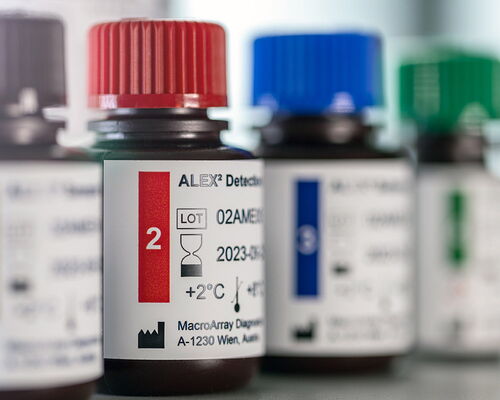
Allergy diagnostics with Alex² Allergy Explorer
Comprehensive and modern allergy diagnostics in the laboratory
To find out which allergens are causing the bothersome symptoms of an allergy, we use the Alex² (Allergy Explorer). The Alex test is a simple and straightforward way to be tested for many different allergens. Analyses are carried out in our in-house laboratory. mycological laboratory our specialist staff.
Allergy analysis ALEX
The major advantage of the ALEX allergy test: It allows for easy testing for a wide variety of allergens. A total of 295 allergens are tested for. The following allergens are included in the test:
- 27 Tree Pollen
- 12 Grass Pollen
- 19 Herb Pollens
- 26 Mites & Cockroaches
- 25 Scales & Epithelia of Animals
- 12 Molds and Yeasts
- 10 Insecticides
- 15 Egg & Milk
- 12 Meat
- 10 Vegetables
- 21 Grains & Seeds
- 38 Legumes & Nuts
- 31 Seafood
- 20 Pieces of Fruit
- 10 Others
Details of the analysis
Proof
ELISA array
Material
The examination requires 0,5 ml of native blood from the fingertip or 0,5 ml of native blood drawn venously.
Analysis time
After your blood sample is taken, it will be analyzed in our laboratory within 1 week.
Based on the composition of our test panel of allergen extracts and molecular allergens, one obtains an almost full image of the sensitization status.
A comprehensive report details the complete sensitization status of a patient. This is then discussed with the doctor.
FAQ - Allergy diagnostics with Alex²
What sensitivities can be detected with the Alex test?
This allergy profile covers 99% of relevant allergy triggers:
- 61 Pollen (tree pollen, herb pollen, grass pollen, cereal pollen)
- 24 mites (house dust mites and storage mites) as well as cockroaches
- 103 plant-based foods
- 40 animal-based foods
- 15 molds and yeasts
- 20 Animal epithelial cells and scales
- 9 Insect venom allergens
- 10 other allergens
When is an ALEX test useful?
- They suspect an allergic condition and would like to have it thoroughly investigated.
- You are thinking of getting a pet and would like to know if you or a family member are allergic to it.
- You experience allergic symptoms when reacting to food and you want to know if it is a true allergy, a food intolerance, or a cross-allergy.
- If an allergy diagnosis and specific immunotherapy (hyposensitization) against your pollen allergy are already planned, the determination of recombinant allergens can help to better assess the treatment prognosis.
How does an Alex laboratory analysis work?
- Blood draw at our practice
- Performing ALEX² analysis
- Creation of your personal laboratory report
- Discussion of the laboratory report with one of our doctors - possibly initiation of therapeutic measures.
What are the advantages of Alex compared to other laboratory analyses regarding allergies?
- Molecular-level analysis allows the primary allergen to be identified and the therapy to be tailored accordingly. This is particularly important in cases of cross-reactivity.
- Children who are too young for a skin test receive a comprehensive analysis using a finger prick.
- A comprehensive sensitization profile is created that covers 99% of allergy triggers.
What can't the ALEX do, or where are its limitations?
The Alex test creates a comprehensive sensitization profile. However, not every sensitization (i.e., the body's predisposition to develop allergic reactions to foreign substances) leads to an allergy. We determine which allergens trigger allergies using various allergy tests (prick test, patch test, scratch test, intradermal test).
Is the ALEX allergy profile covered by health insurance companies?
The patient receives an invoice according to the German fee schedule for physicians (GOÄ). These costs are usually covered by private health insurance. We will provide you with a cost estimate that you can submit to your health insurance company for review. Those with statutory health insurance can also access these services as self-pay patients. The costs are not reimbursed by statutory health insurance. The laboratory costs for the Alex analysis are approximately €280. The costs for the medical consultation/treatment are additional.